
The Future Feels Brighter When Children Learn to Care
Children notice more than we imagine. They see trees being cut down, roads becoming packed, temperatures getting warmer and parks becoming smaller. They ask simple questions like why the sky looks different, why summers feel hotter, or why we should not waste water. These small questions are often the beginning of awareness.
If children are taught to protect nature at a young age, they gradually develop into responsible citizens who appreciate the importance of taking care of the nature around them.
This is the reason World Environment Day becomes such an excellent opportunity to show children that even small acts can make a difference.
Why Environmental Learning Should Start Early
Children learn habits early, and those habits often stay with them for life. Environmental awareness education can aid children understand:
- The necessity to preserve natural resources
- Everything we do every day can affect the world around us
- The importance of making responsible decisions
Simple things such as turning off lights, cutting down on the amount of waste, and taking care of the environment can be lifelong values.
What World Environment Day Teaches Children
This day encourages children to think beyond textbooks and understand their role in protecting the environment. It helps students learn:
- Become responsible citizens
- To understand the importance of sustainable development
- Importance of thinking about the future generation
They also learn that caring for the Earth is a good habit to start from a young age.
Small Actions Can Create Big Change
Children do not need to do something very big to contribute. Small changes can make a lot of impact in the long run.
- Bottles carried should be reusable
- Water & electricity saving
- Using less paper and not wasting it
- Maintain clean surroundings
When students regularly practice these practices, environmental responsibility becomes part of everyday life.
Schools Help Children Learn to Love and Protect Nature
School is one of the most important places where children start to understand their responsibility to nature and society. Students at a school in Noida can understand the importance of environmental ethics by:
- Holding workshops and events
- Conducting plantation activity in school garden
- Hands-on learning experiences
- Community based programs
- Creative collaboration and conversations
These fun activities help children learn how to take care of our planet in a simple and exciting way.
Ramagya School: Teaching Children to Build a More Sustainable Future
Hands-on participation, awareness drives and practical experiences help students to connect with real-world issues and promote environmental learning at Ramagya School.
Students are encouraged to think about the environment, develop responsible behavior, and recognize how their choices affect the community and all the natural resources. We believe that children learn the best when they’re active instead of reading about it in their textbooks.
Building Sustainable Cities and Communities: Learning Sustainability through SDG 11
Ramagya School organised a fun learning activity on SDG 11: Sustainable Cities and Communities with the British Council to help students understand how to make cities cleaner, safer, and better for everyone.
The activity inspired students to consider how greener, cleaner, and smarter cities could be built through sustainable practices.
Students learnt about different sustainability approaches followed by:
- India
- Germany
- United Kingdom
- Singapore
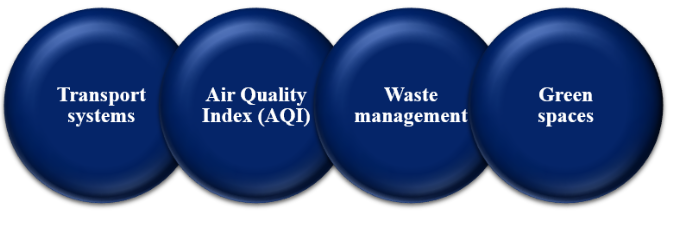
Through interactive presentations, discussion and collaboration students were able to explore topics like:
This made students aware of how different nations are towards living a sustainable lifestyle.
Students Learnt Through Activities and Discussions
Students of different grades took part in activities that were appropriate for their age group.
- Class VI-VIII: Designed posters that were based on sustainability ideas as well as environmental awareness.
- Class IX–X: These students made sustainability charts and graphs to understand how to keep the environment clean and healthy.
- Class XI-XII: Students were involved in debates and policy discussions on sustainability.
Students shared their thoughts, talked about their ideas, and discussed simple ways to make their own communities cleaner and better. The event encouraged:
- Teamwork
- Thinking creatively
- Analytical abilities
- Responsible citizenship
This approach to learning helped students fully understand the importance of environmental responsibility.
Building Responsible Habits for Tomorrow
Environmental education is meaningful once children start applying their knowledge in their daily lives. At Ramagya School, students are encouraged to:
- Make thoughtful decisions
- Pay attention to the environmental issues
- Create better daily habits
Children learn through these experiences that change starts with simple actions. This is among the reasons that parents appreciate an innovative school in Noida which focuses on academics, and responsible learning.
Growing Children Who Care for the World
The aim of such an education isn’t solely to increase awareness, but also to inspire people to take action. Once children have a sense of sustainability, they can make conscious choices that influence their homes, schools, and communities. World Environment Day is all about keeping our Earth happy and clean.
Through encouraging discussion, participation and hands-on learning experiences, Ramagya School continues helping students develop into responsible citizens who take care of the future generations.
FAQs
- Why is celebrating World Environment Day important for students?
World Environment Day helps students understand environmental responsibility and encourages them to build better habits for the future.
- How can children help in protecting nature?
Children can save water, reduce waste, plant trees, avoid unnecessary electricity use, and keep their surroundings clean.
- Why should schools teach environmental awareness?
Schools help students develop responsible habits and understand how daily actions affect the environment.
- What are some easy environmental habits students can follow?
Students can use reusable items, reduce paper waste, recycle, save energy, and care for green spaces.
- Which school in Noida encourages environmental awareness among students?
Ramagya School encourages environmental awareness through practical activities, sustainability discussions, and student participation programs.